


“I was a little surprised by it.”
Florida is preparing to launch the nation's first state-funded drone pilot program designed to stop active school shooters, but families affected by the 2018 Parkland massacre have mixed feelings about the innovative approach.
The pilot program, set to begin early next year in Broward, Volusia and Leon counties, will invest more than $550,000 in public funds to deploy encrypted drones operated remotely by professional pilots in Austin, Texas, more than 1,000 miles away from Florida schools. Florida’s Department of Education recently announced the school districts participating in the pilot program.
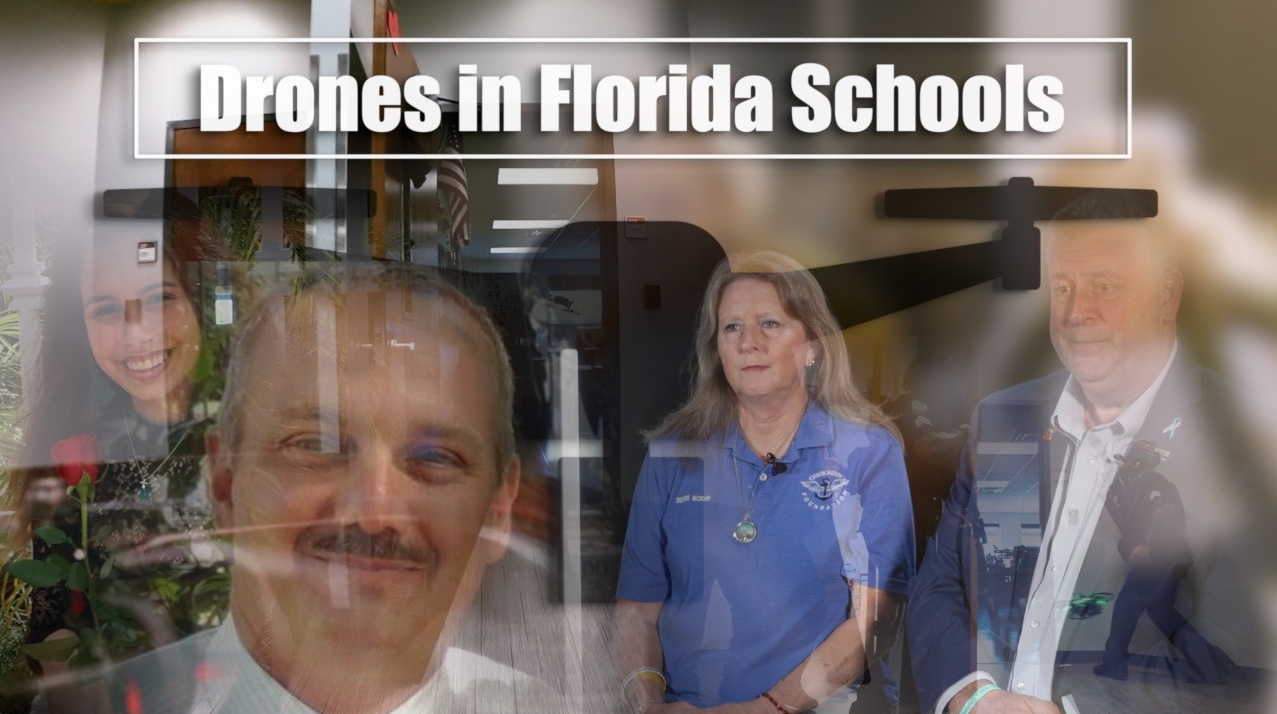
Tony Montalto and Debbie Hixon, both members of Stand with Parkland, shared their concerns about the program during recent interviews with Investigative Reporter Katie LaGrone. Montalto lost his 14-year-old daughter, Gina, in the Valentine's Day shooting at Marjory Stoneman Douglas High School, while Hixon's husband, Chris, the school's athletic director, was also among the 17 people killed.
Watch full report from Katie LaGrone
"I think I was a little surprised by it," Montalto said about his first impression of the drone program.
"I did share concerns of course."
Both families questioned the technology's reliability, particularly regarding signal strength and communication failures. Issues that plagued the response during the Parkland shooting.
"How’s it going to know who’s its attacking?” Hixon also asked.
"Will they operate normally or as they're supposed to? How are we going to get them to fly through the hallways again, depending on the remote-control connection," Montalto said.
"You have to remember, we're here partially because communications failed,” he said.
The drones, developed by private start-up Campus Guardian Angel, would be strategically placed on school campuses and activated with remote panic buttons. The devices are designed to help first responders quickly locate potential shooters and deploy non-lethal distractors if necessary.
"If we can get a shooter to do anything besides shoot people, we're winning, right?" Bill King of Campus Guardian Angel told LaGrone during her visit to the Austin headquarters in November.
"If you're shooting at the drone, great. We love that. If you're trying to hit the drone with a broomstick, great. We love that. If you're running from the drones, perfect,” he said.
Innovative but realistic, cost-effective?
Despite their concerns, both Parkland families acknowledged the potential value of the program.
"We'll have to see through the pilot program what the value is of this and if it's worth the cost," Hixon said.
"I do applaud the innovators who came up with this and the state of Florida for taking the chance on it,” added Montalto.
Montalto, a professional airline pilot familiar with technology capabilities and failures, emphasized the importance of maintaining multiple security layers.
"We never want to put all our eggs in one basket," Montalto said.
"Quite frankly, it's a layered approach that's going to help protect our schools, and you should never remove the human element."
When asked if drones could have saved his daughter, Montalto expressed uncertainty.
"It's hard to tell, because, unfortunately, Gina was one of the first victims shot that day," Montalto said.
"And these drones aren't patrolling; they just pop up when needed. So that's part of the problem. We need to focus on the prevention piece rather than the reaction piece."
Stand with Parkland
"We miss Chris every single day," Hixon said.
"When you wake up and realize that your daughter has been taken from you, especially in some place where she should have been safe, that's one of the reasons we work so hard to change laws and policies so that no other family has to feel what we feel," Montalto said.
As members of Stand with Parkland, both families have championed numerous changes in state policy and law to improve school safety, including Florida's red flag law and its behavioral threat assessment monitoring program.
Many details about the pilot program remain unclear, including how many schools will participate, which specific schools in the chosen districts will be equipped, and whether the program could realistically expand to every public school in the state.
This story was reported on-air by Katie LaGrone and has been converted to this platform with the assistance of AI. Our editorial team verifies all reporting on all platforms for fairness and accuracy.
Share Your Story with Katie
Katie LaGrone focuses on making sure Florida’s laws actually work and her investigations have gotten results. If you know of a policy or law that’s not working how it’s intended, send Katie a message below.
.

Wiregrass Elementary staff report injuries, Pasco County Schools investigates
Pasco County Schools is investigating Wiregrass Elementary after teachers and staff reported on-the-job injuries and a lack of administrative support.
