

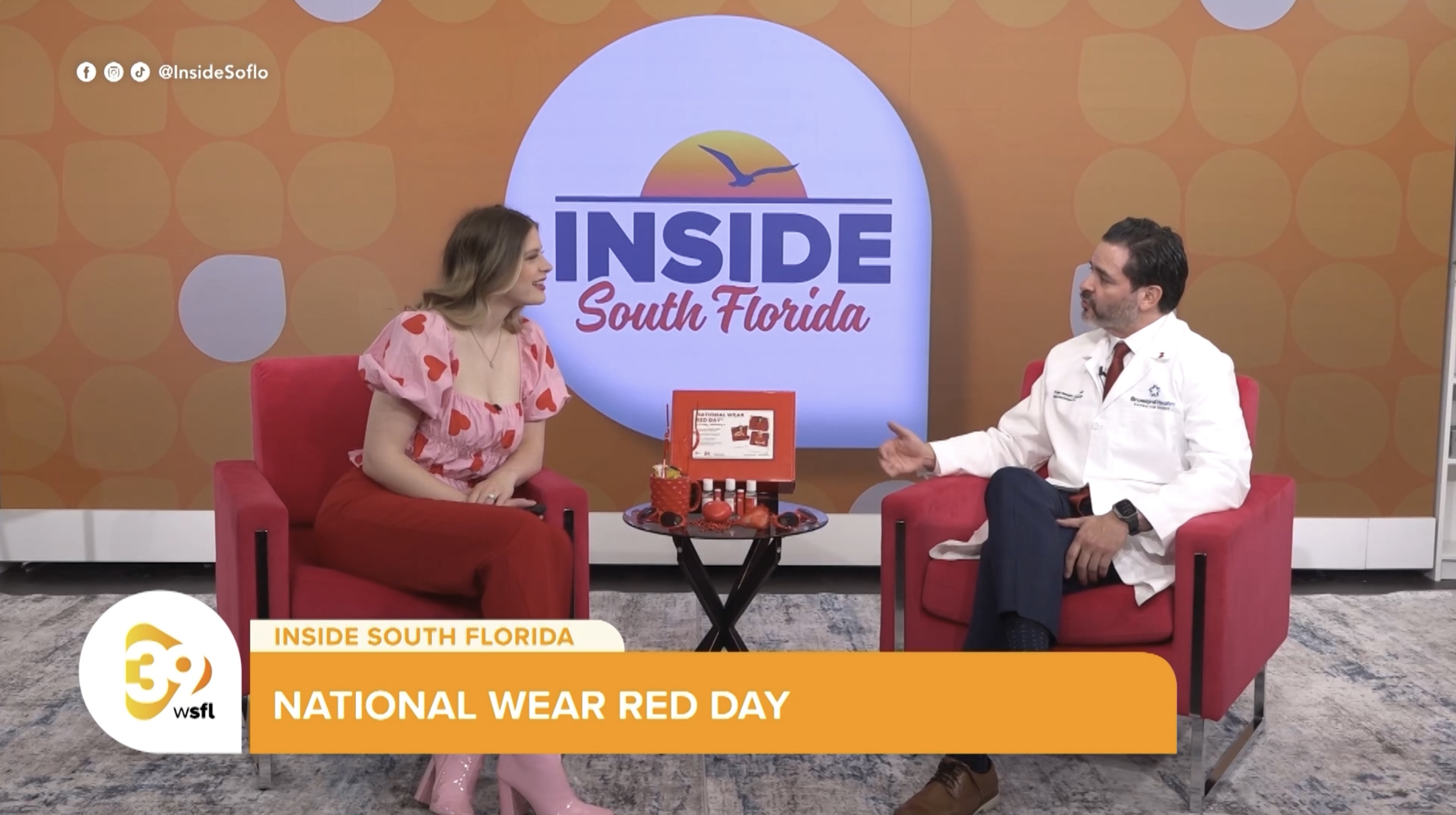

National Wear Red Day serves as a crucial reminder about cardiovascular health, particularly for women who have historically been underdiagnosed when it comes to heart disease. Dr. Pablo Rengifo-Moreno, Medical Director of Structural Heart Disease for Broward Health, emphasizes the importance of this awareness day and the life-saving potential of hands-only CPR.
"The American Heart Association has done a very big effort into communicating to the people in communities that it is very important to take care of yourself, especially in the cardiovascular aspects, because it is the number one way that people actually get in trouble, health-wise, and actually can die from them," Rengifo-Moreno said.
The cardiologist highlights a concerning statistic about women's heart health that many people don't realize.
"Almost 40% of women, as early as age 20, can start having coronary artery problems," Rengifo-Moreno said.
This year's American Heart Month focuses on hands-only CPR, which involves two simple but critical steps that can save lives. First, recognize when someone has lost consciousness and immediately call 911 for help. Second, perform chest compressions at the rhythm of a popular song.
"You can press on that chest at the speed or the rhythm of a pop song. If you're doing that, you're probably giving 100 to 120 beats per minute. And that's exactly what you need to do to restore circulation in that patient while you get help," Rengifo-Moreno said.
Understanding the difference between a heart attack and cardiac arrest is also crucial. Cardiac arrest occurs when circulation stops, and the heart is not working, requiring immediate CPR. A heart attack involves the obstruction of a coronary artery, which supplies blood and oxygen to the heart muscle, but doesn't necessarily lead to cardiac arrest.
The symptoms of heart problems differ significantly between men and women, which has led to diagnostic challenges.
"Unfortunately, all books were written 100 and 150 years ago, with the diagnosis of the symptoms of how men experience chest pain. And men are very reproducible, how they feel a heart attack, whereas women can be all over the place. It can be shortness of breath, anxiety, back pain, or chest pain," Rengifo-Moreno said.
This variability in women's symptoms makes diagnosis more difficult and underscores the importance of taking female patients' concerns seriously.
"That's why we have to take very seriously when a female patient expresses symptoms, because we are more prone to miss the opportunity to intervene," Rengifo said.
The American Heart Association offers comprehensive resources for learning CPR and other life-saving techniques. Heart.org provides access to CPR lessons, basic life support, and advanced life support programs for community members interested in gaining these critical skills.
