


Disclaimer: This Inside South Florida segment is sponsored by Intuit Credit Karma. All opinions and views are of the advertiser and does not reflect the same of WSFL-TV.
Millions of young Americans are navigating a financial catch-22: they need credit to access financial opportunities, but they need those opportunities to build credit in the first place.
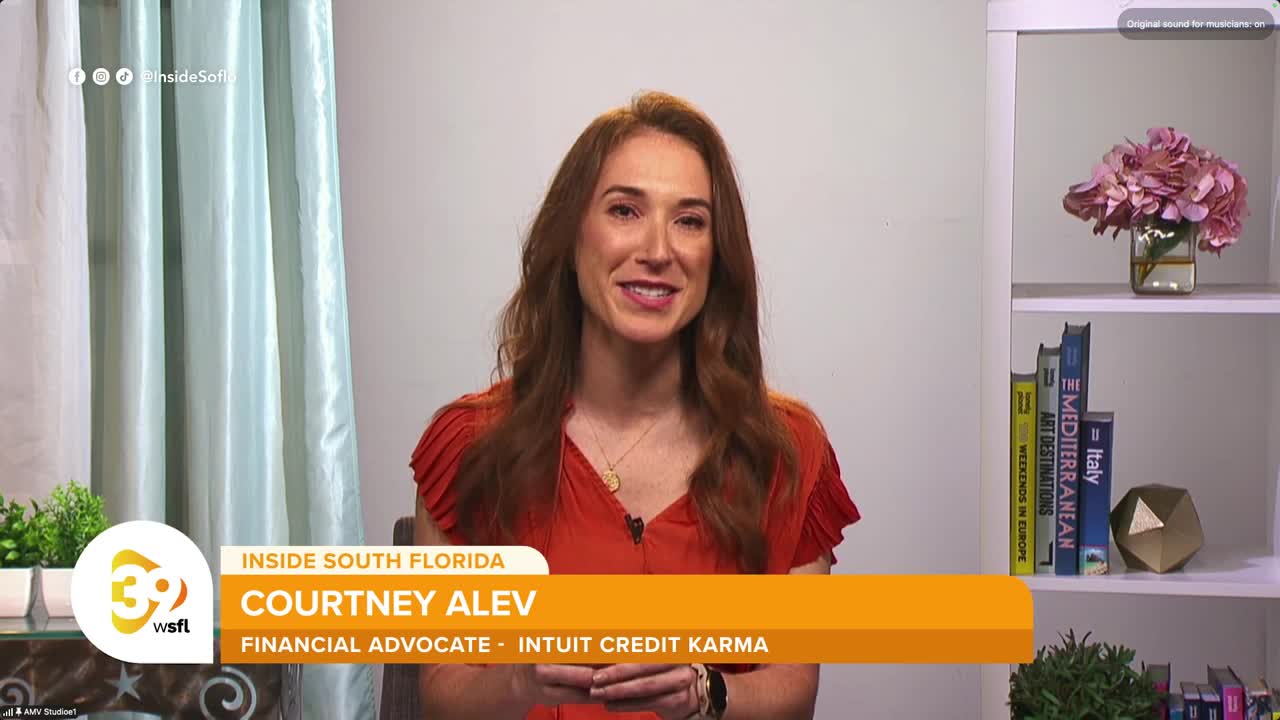
Courtney Alev, consumer financial advocate for Intuit Credit Karma, joined Inside South Florida to break down what it means to be credit invisible and share practical steps for building credit responsibly.
"Roughly 17 million Americans fall into this population we'd call credit invisible or thin file, which means they either don't have a credit report or they don't have enough data to generate a credit score," Alev said.
Without a credit score, everyday milestones can become significant hurdles.
"Without a credit score, it can be incredibly difficult to accomplish things that many of us might take for granted, like renting your first apartment or financing a car. And this is going to impact young people even more because they're early in that financial journey. And many of them tell us that they feel that they're at a financial disadvantage because they don't have this credit history," Alev said.
For those just starting out, Alev said the first step is not to be intimidated. She pointed to tools that build on habits people may already have, like paying bills on time.
"Intuit Credit Karma has a tool called Credit Spark, which can help you turn your existing utility or phone payments into positive payment history without needing to take on debt. So it's a great way to get started," Alev said.
Alev also offered several practical tips for building credit responsibly. She recommends paying bills on time, keeping balances low, and avoiding charging purchases you cannot pay off at the end of the month.
"It can be a great way to start with a small recurring transaction. Maybe you have a streaming subscription like Netflix or Spotify. Put that on a credit card. Set up autopay. That way, you're going to get that positive payment history every single month without needing to take on debt or really risk going into it," Alev said.
Alev added that she personally pays off her credit card bills every week rather than waiting for the monthly due date.
"Not only does that keep my balances low, it also ensures that I know where my money is going. So if I need to rein in my spending, I can make those changes and not risk getting to the end of the month and then being surprised with a large bill," Alev said.
More information about Credit Karma's tools is available at creditkarma.com or through the Credit Karma app.
This story was reported on-air by a journalist and has been converted to this platform with the assistance of AI. Our editorial team verifies all reporting on all platforms for fairness and accuracy.
