


Disclaimer: This Inside South Florida segment is sponsored by CooperVision. All opinions and views are of the advertiser and does not reflect the same of WSFL-TV.
Myopia, commonly known as nearsightedness, is on the rise in children, and experts say it is more than just needing glasses. It is a progressive condition that can worsen over time and affect long-term eye health.
Dr. Vega, a pediatrician, said myopia occurs when the eyeball grows too long, causing light to focus in the wrong place.
"It's a condition that needs to be identified, needs to be treated, because if left untreated, the child is going to have developmental issues, learning problems, and it's going to affect this child's life more," Vega said.
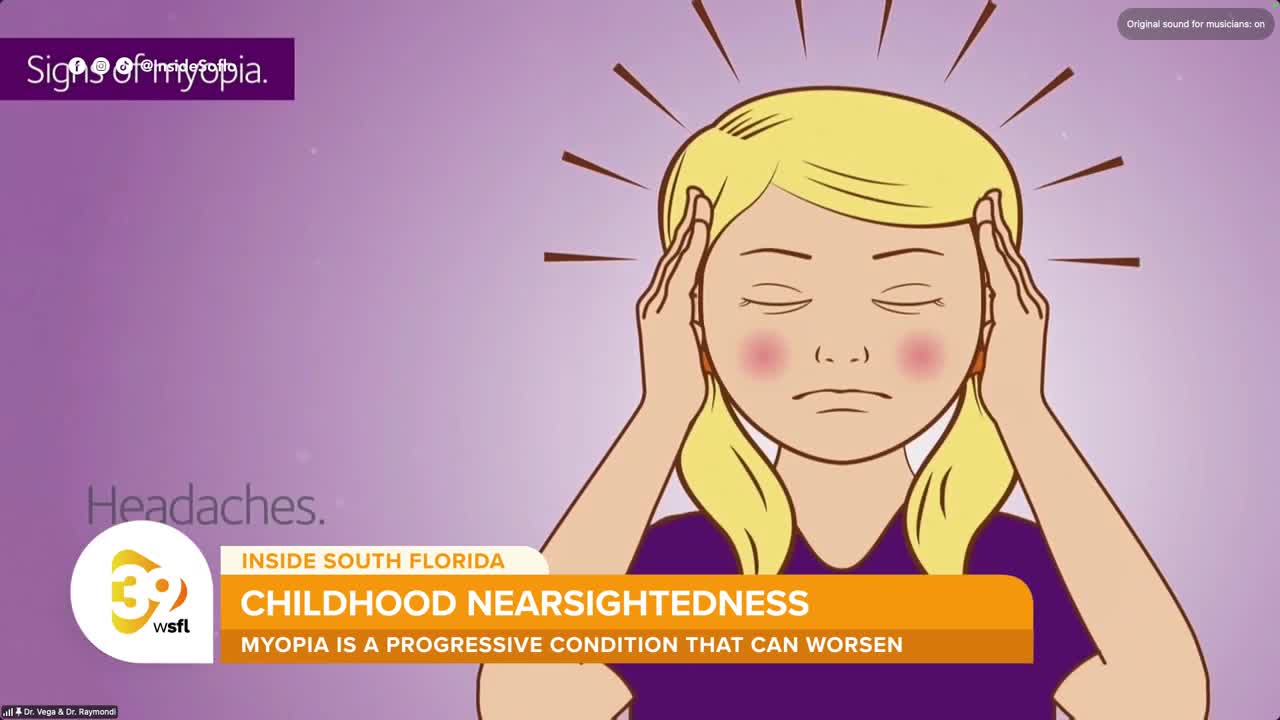
Signs can include sitting too close to a TV or computer screen or excessive blinking. Myopia can be diagnosed during a well-child visit with a pediatrician.
Dr. Raymond, a pediatric optometrist, said early intervention is critical because an eyeball that grows too long too quickly can damage delicate retinal tissue.
"That means that the retinal tissues, the most delicate tissues in the eye, can become damaged, and this can lead to things like retinal detachments, glaucoma, myopic macula, all of which can lead to vision loss," Raymond said.
Raymond said MiSight 1 Day contact lenses are the number one contact lens for kids and the only FDA-approved option proven to help slow the progression of myopia in children. The lenses help children see clearly while slowing the rapid eye growth associated with the condition.
Parents can learn more at Coopervision.com.
This story was reported on-air by a journalist and has been converted to this platform with the assistance of AI. Our editorial team verifies all reporting on all platforms for fairness and accuracy.
